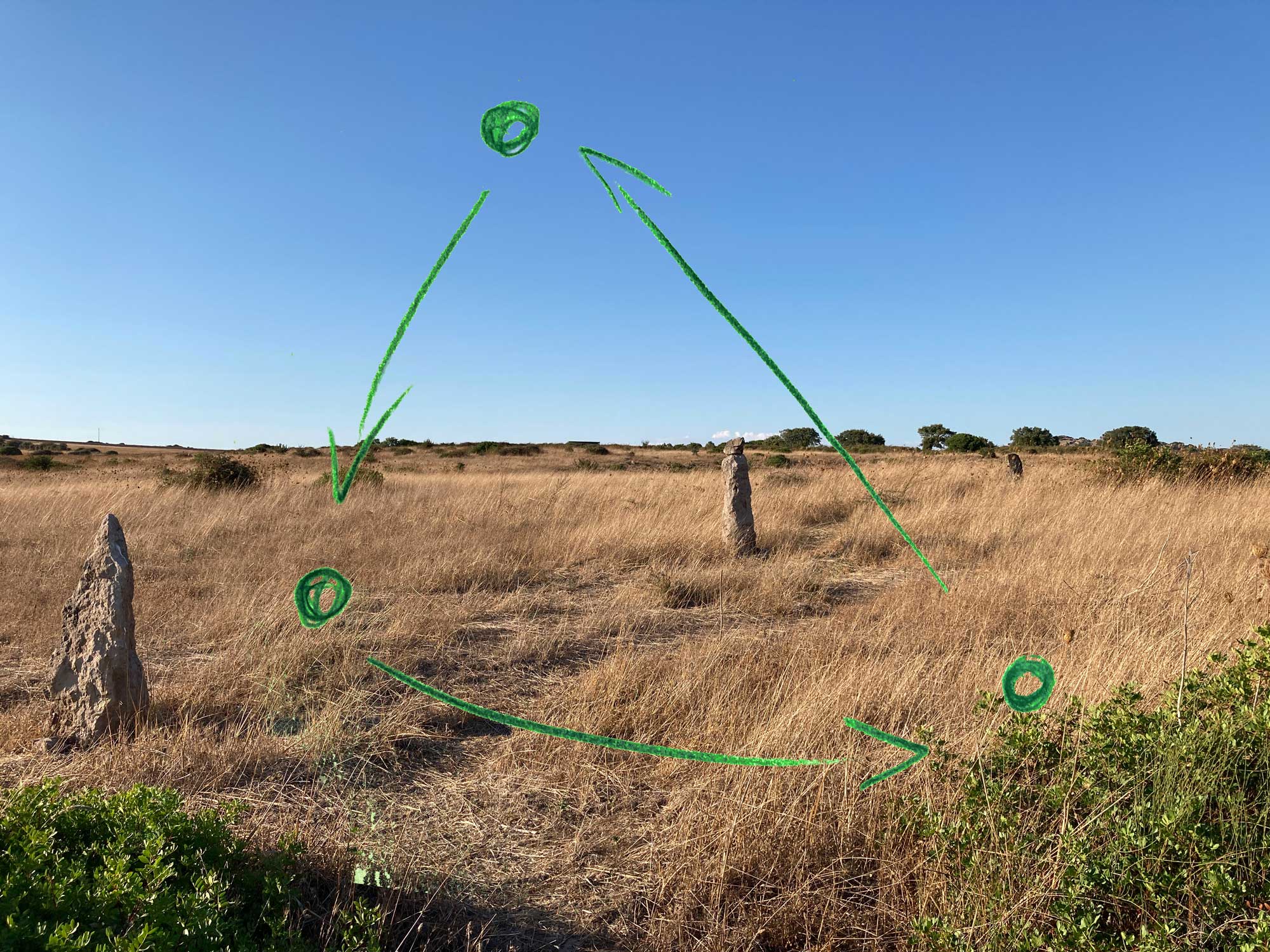
Building on previous cycles curated by Archipelago Network and Providenza in autumn 2023 and spring 2024, this chapter further develops collaborations between international artists and local communities across Corsica, Sardinia, and Syros.
For Chapter #03: …and so we’ll end up singing, Cherimus has invited artists Maya Aghniadis (1991, Greece/Lebanon), Roberto Casti (1992, Italy), and Lukas De Clerck (1994, Belgium) to explore the interconnectedness of Mediterranean musical traditions and the passage of time through innovative, cross-island artistic projects. Each of their works delves into the cultural and auditory landscapes of Syros, Corsica, and Sardinia, focusing on rhythm, melody, and the reimagining of traditional instruments. By blending elements of the past and present, they aim to create a speculative, shared musical narrative that transcends geographical boundaries.
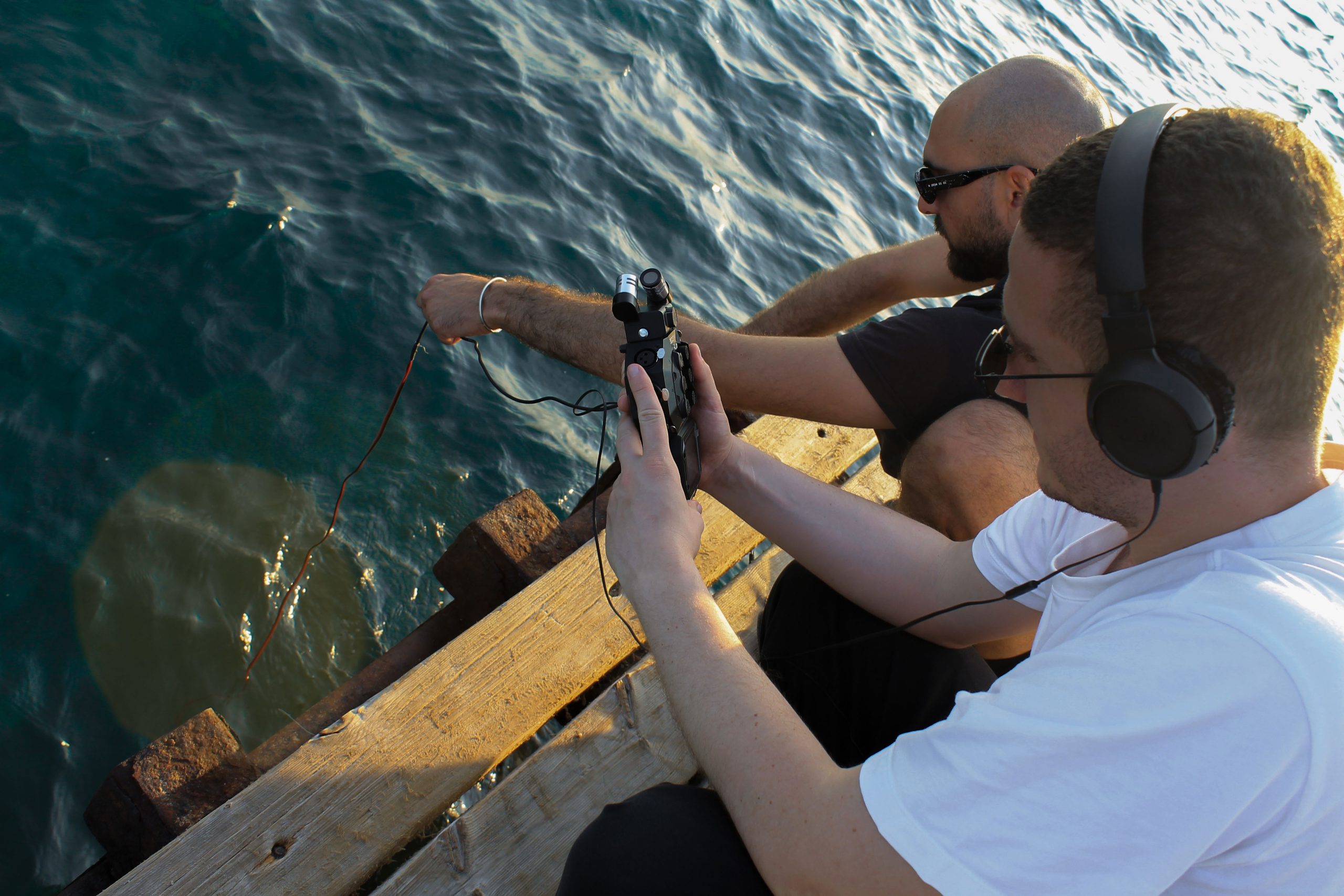
From September 17 to 25, 2024, the artists visit Syros for the initial part of their research, hosting a series of public workshops.
Maya Aghniadis
Ousura
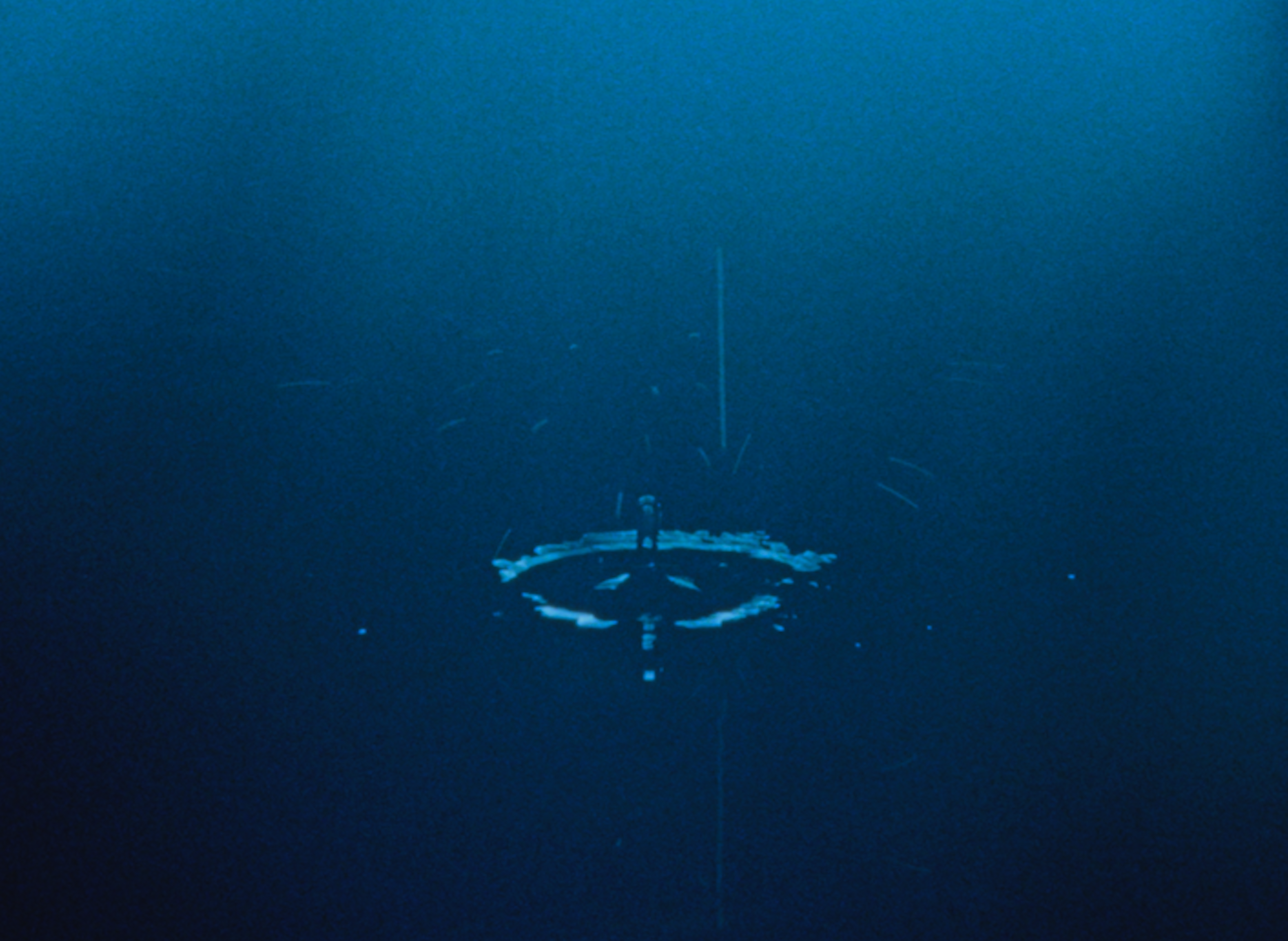
Aghniadis’s project explores the interplay between past, present, and future, reflecting on how we often plan ahead, lose touch with the present, and grapple with our past. Ousura is a sonic narrative that delves into the essence of time through rhythmic play and evocative soundscapes, transporting listeners to a space that feels both ancient and familiar.
The project weaves together cultural and auditory threads from Syros, Corsica, and Sardinia. It also incorporates elements from workshops where diverse groups perform together on a single note and rhythm, despite never meeting, creating a rich tapestry of interconnected sounds and experiences.
Maya Aghniadis, also known as Flugen, is a music composer and multi-instrumentalist raised in Lebanon based in Athens. After completing a year of professional training in Film Scoring in 2016, Maya began exploring new sounds and theories, leading to the creation of her project, Flugen.
Flugen’s music evolves over time, blending percussive beats, soulful melodies, and vocal harmonies with elements of neo-classical and ambient soundscapes. Maya’s artistic approach revolves around collaborations and storytelling through music, drawing inspiration from the echoes of the Mediterranean Sea.
Lukas De Clerck
Experimental Archeology
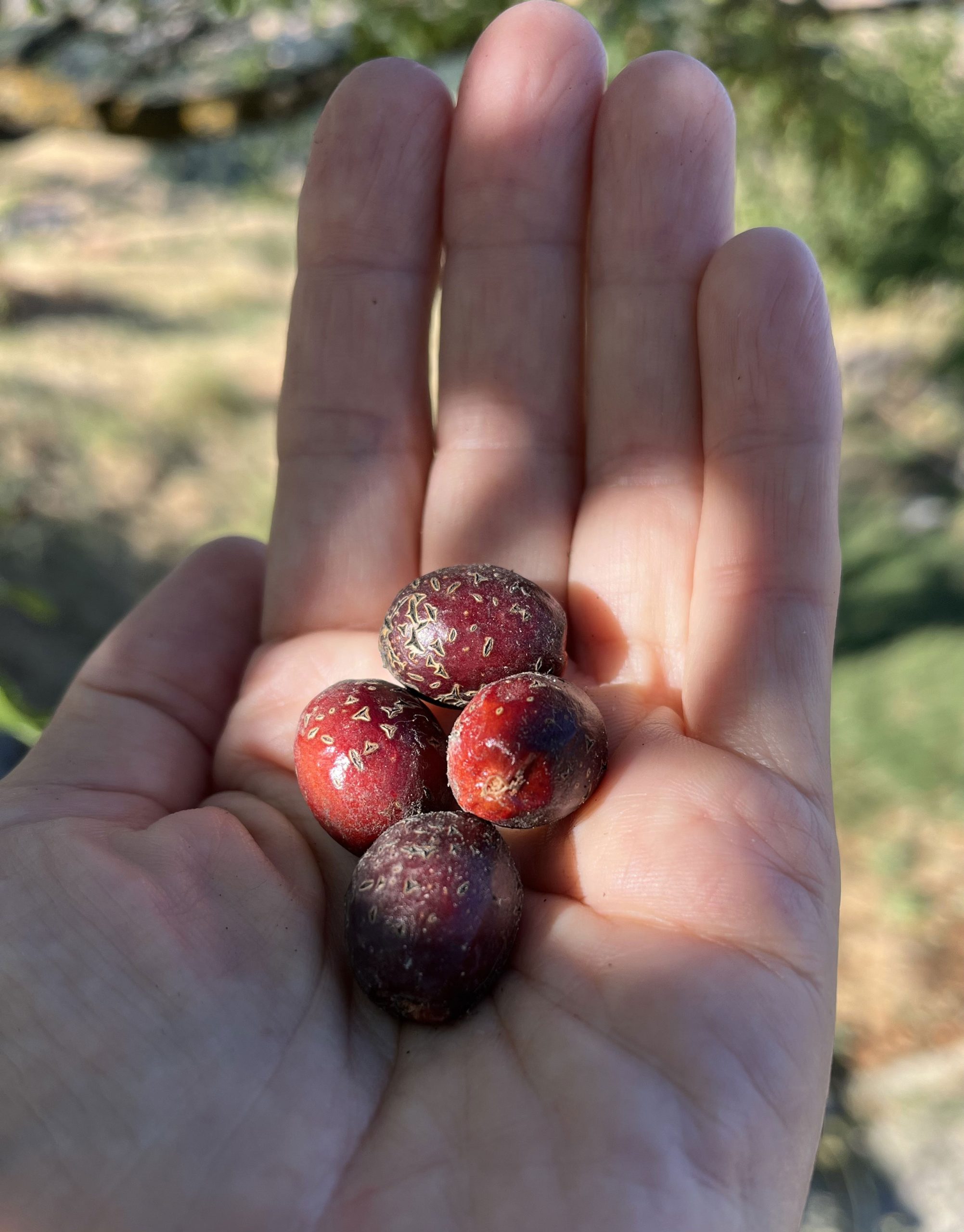
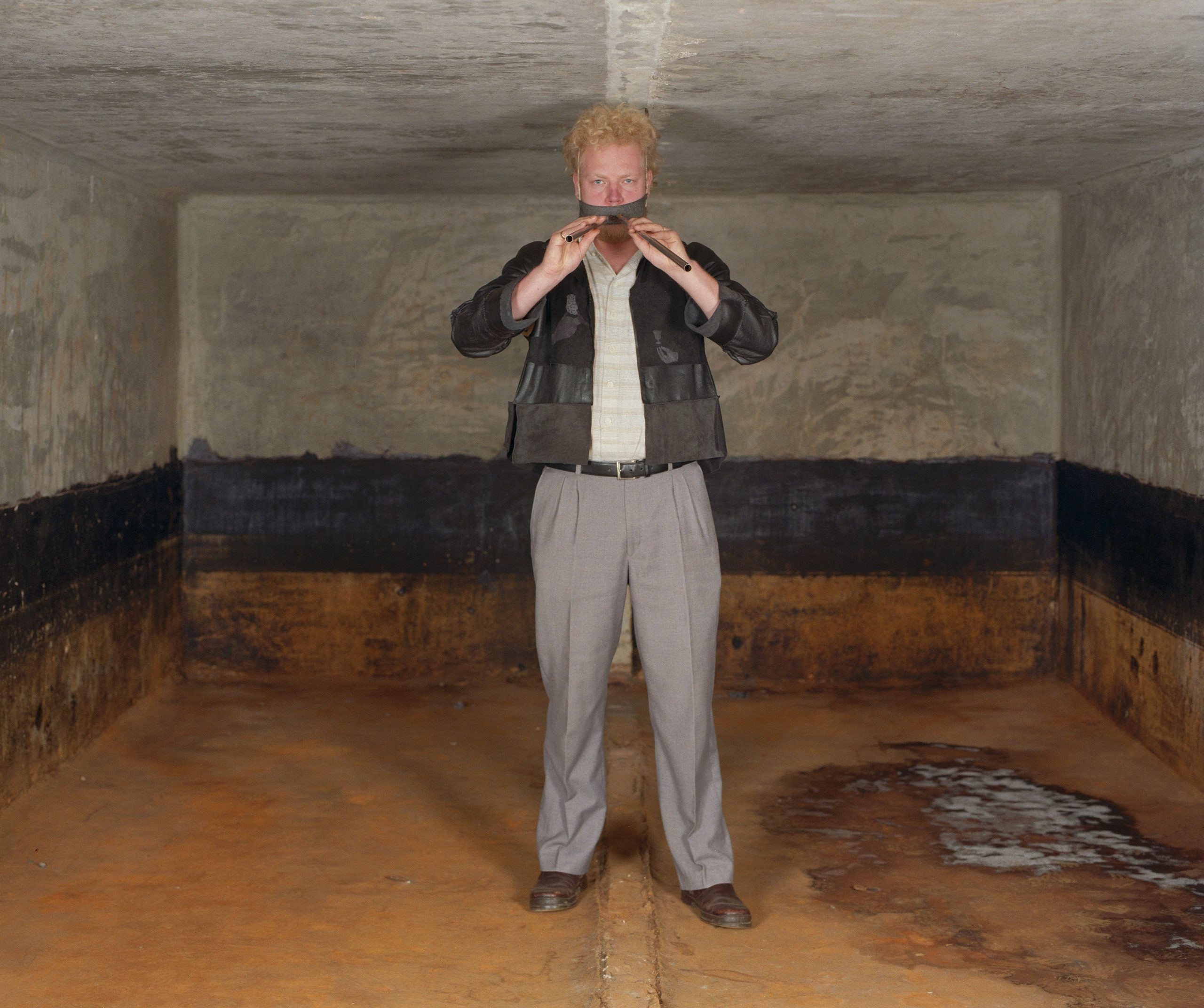
De Clerck’s project explores the intersection of Mediterranean musical traditions through the crafting of aulos reeds from harvested reed (phragmites australis). Focusing on the late harvest season in Syros, the project extends across Syros, Sardinia, and Corsica, integrating local materials and traditions to create a unique cross-island musical experience. In Sardinia, the project will be inspired by the launeddas, with plans to develop a fusion instrument that combines the aulos and launeddas, symbolizing a musical connection between the islands. Corsica’s caramusa, akin to a bagpipe, adds another layer to this exploration.
By uniting these diverse elements—reed harvesting, traditional instruments, and regional variations—the project aims to weave a rich tapestry of Mediterranean sound. This collaborative effort serves as a creative prelude to further exploration and fusion of musical traditions across the islands.
Lukas De Clerck is a musician and sound artist. His artistic practice is currently centered around the Aulos, an ancient Greco-Roman, double-reeded double pipe, that went extinct more than a millennium ago. After several years of delving deep in the practice of aulos reed making and playing replicas of ancient instruments, he opens up his inevitably auto-didact artistic output. Following the desire to strip the instrument from its enigmatic past, De Clerck created a new, contemporary aulos: The Telescopic Aulos of Atlas.
Roberto Casti
Song for a future embrace
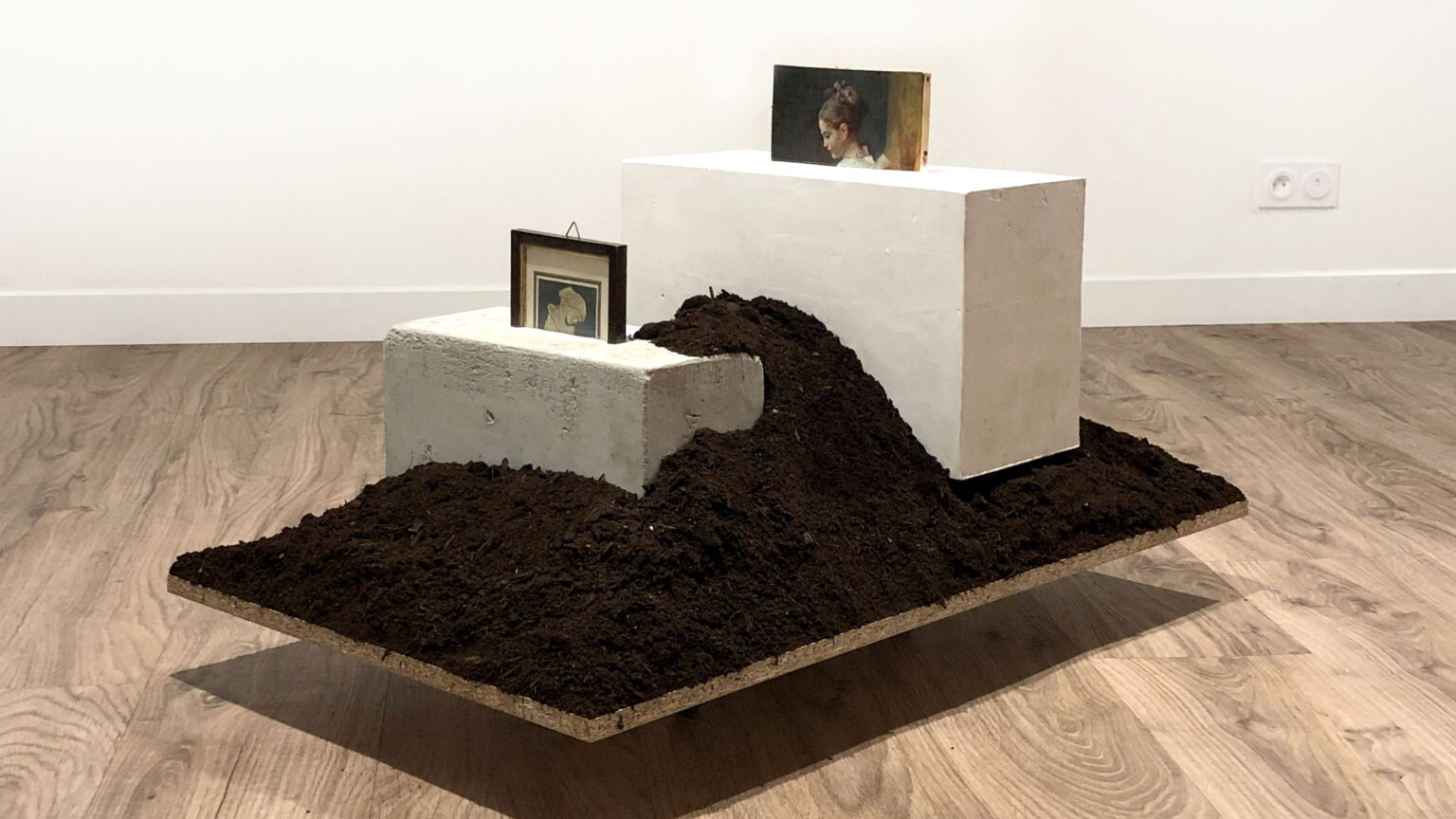
Casti’s project explores the concept of anticipation through a unique sound installation. The composition, which comprises rhythm, melody, and vocals, is presented in its individual parts rather than as a unified piece. The installation features three speakers and various musical instruments and objects used to play and record the work. These elements remain inactive until activated by the participants from the islands who contributed to its creation.
The installation represents a promise of future collaboration rather than a reflection on past traditions. While Syros, Corsica and Sardinia share cultural commonalities, they also highlight the potential for new forms of communication and alliance. By presenting the song’s components separately, the project underscores the anticipation of a future performance where all contributors can come together.
Roberto Casti is an Italian artist, musician and writer. His artistic practice – spanning across different media such as sound, performance, video, installation and drawing – is not focused on a formal knowability but rather on a constant and necessary interpretative and theoretical research on the reality seen as a place of relationships and cohabitation. With the collective project The Boys and Kifer, founded in 2014 as a fictitious music band, he investigates new ways of being together collaborating with different artists, theorists and musicians.
He has collaborated and exhibited in various spaces and institutions such as MACRO and IUNO (Rome), MAN (Nuoro), FRAC of Corte (France), Marsèlleria (Milan), PAV – Parco Arte Vivente (Turin), OGR – Officine Grandi Riparazioni (Turin), and the Brera Academy of Fine Arts (Milan). He has published articles for Nero On Theory, Kabul magazine and Antinomie. In 2023, he contributed to the publication of Soft Crash, a collective book produced by the MACRO museum of Rome.